
Lesson · 4 min Gentle
Leaving the Cave
In one line What you usually see may be only shadows; ask what a different light would show.
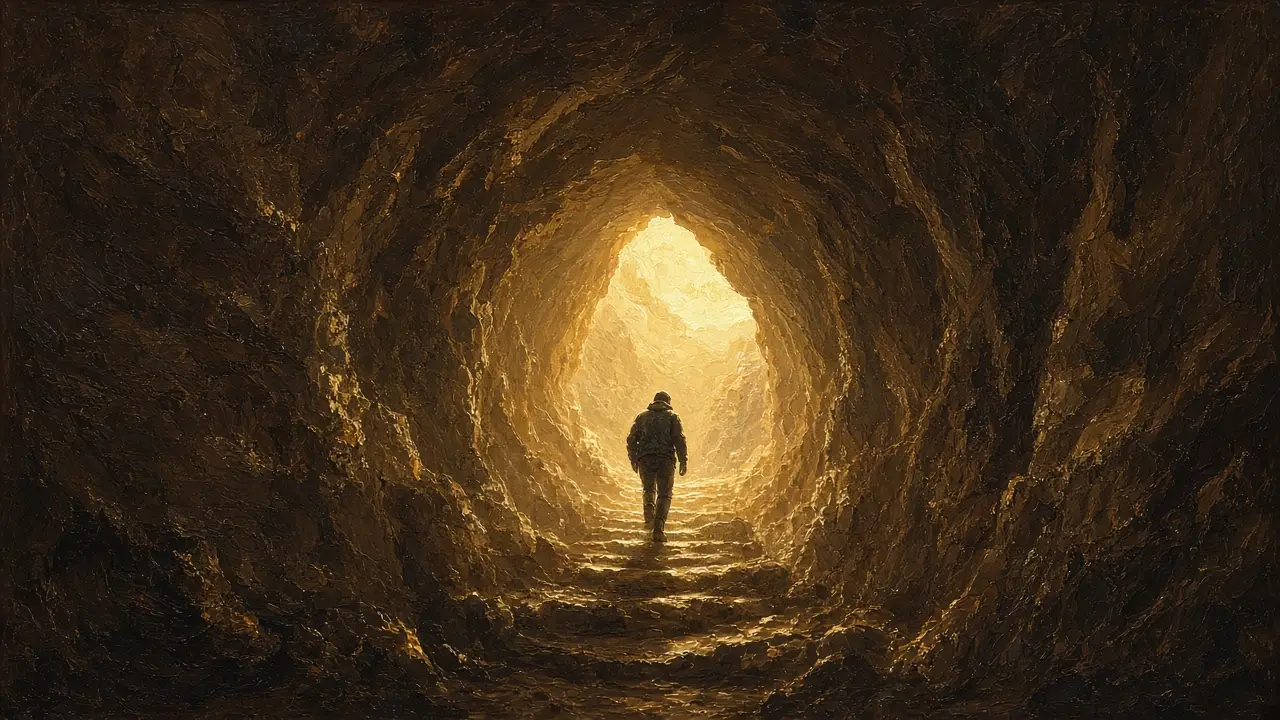
Plato’s cave is a picture of a mind that trusts its usual show. Prisoners watch shadows and name them as the world, because shadows are all they have ever been shown.
Leaving hurts, and Plato makes a point of it. The first look at a wider source of light feels like error, not like progress. A new fact often arrives as an insult to the story you were using.
The lesson is not “trust nothing you see.” It is “ask what the picture is a picture of, and what would still be there if the lighting changed.”
The only feed

Noah reads one news feed for a year. The villains are stable, the heroes are stable, and every event confirms the last event. When a long investigation contradicts the feed, Noah calls the investigation a trick.
The feed may contain true items. The cave is the refusal to let any other light count. Turning around would mean reading the investigation far enough to say what it claims.
Try this today Read one good source that disagrees with your usual feed, and note what it adds.
Cite or share this lesson
A plain reference you can paste into notes or an essay:
Quest2Reason. “Leaving the Cave.” https://quest2reason.com/learn/lesson/allegory-cave. Accessed 13 November 2026.
Sources
- Plato, Republic, Book VII — The allegory of the cave: shadows, the turn, and the pain of a brighter light.
- Stanford Encyclopedia of Philosophy, “Plato” — A guide to the Republic’s picture of education as a turning of the soul.