
Lesson · 4 min Gentle
Courage
In one line Courage is acting well in the face of fear, for something worth it, with some sense.
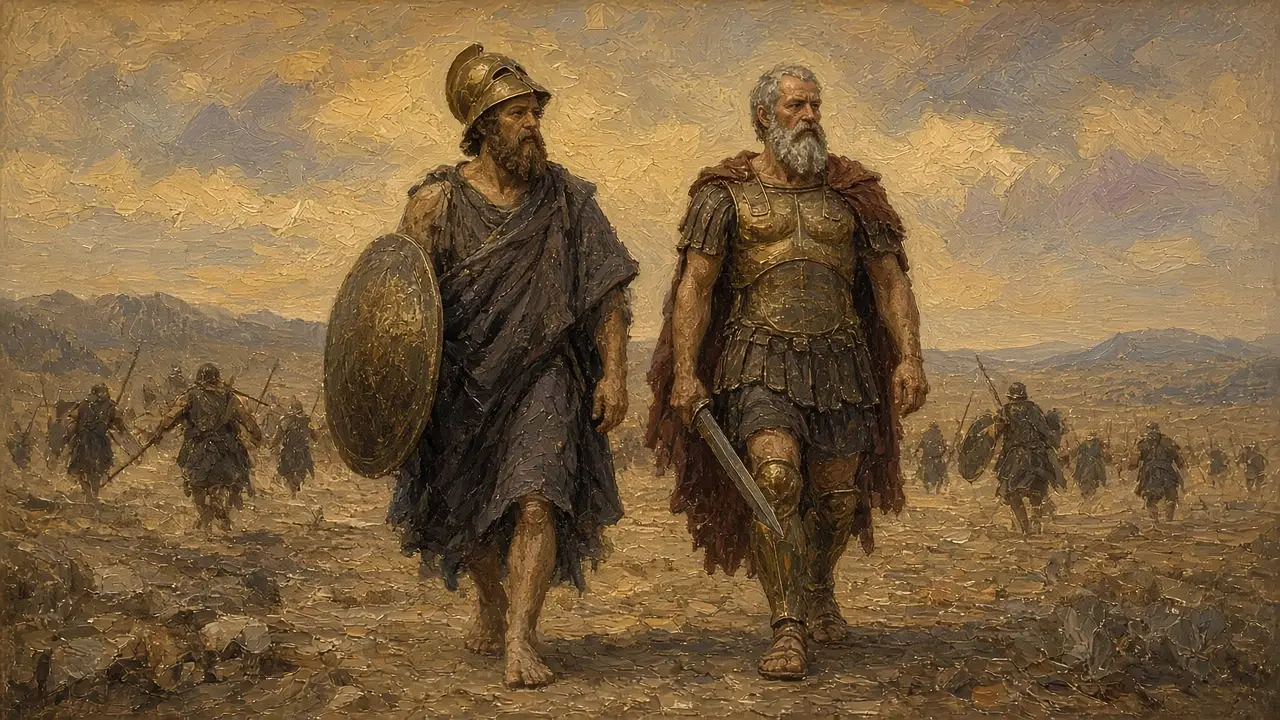
In Plato’s Laches, two generals try to say what courage is. One says it is standing firm in battle. Socrates points out that soldiers sometimes advance by retreating. He tries again: it is endurance of the soul. But endurance without wisdom can be foolish, as when a person holds on in a hopeless cause.
Aristotle later described courage as a mean between two faults. Too little, and we are cowards, run by fear. Too much, and we are reckless, blind to real danger. The brave person fears what is truly fearful, and acts anyway, for something worth the risk.
So courage has three parts: a real fear, a worthy aim and good judgment. Without the last two, it is only nerve.
The two climbers

Two climbers reach a ridge as a storm approaches. Dan presses on to reach the summit, brushing off the warning signs. Ira is afraid too, but she turns back and helps a slower party down.
Dan is reckless: he feels little fear and has no worthy aim. Ira faces her fear for something that matters, and judges what to do. Most people would call her the braver of the two.
Try this today Name one thing you fear that is worth facing, and one small step you can take this week.
Cite or share this lesson
A plain reference you can paste into notes or an essay:
Quest2Reason. “Courage.” https://quest2reason.com/learn/lesson/courage. Accessed 13 November 2026.
Sources
- Plato, Laches — Socrates and two generals try to say what courage is and fail to settle on an answer.
- Stanford Encyclopedia of Philosophy, “Virtue Ethics” — Covers courage as a virtue between fear and recklessness.
- Aristotle, Nicomachean Ethics, Book III — Courage as the mean between cowardice and rashness. Paraphrase.