
Lesson · 4 min Gentle
The Finger and the Moon
In one line Words can point at what matters, but do not mistake the pointing for the thing.
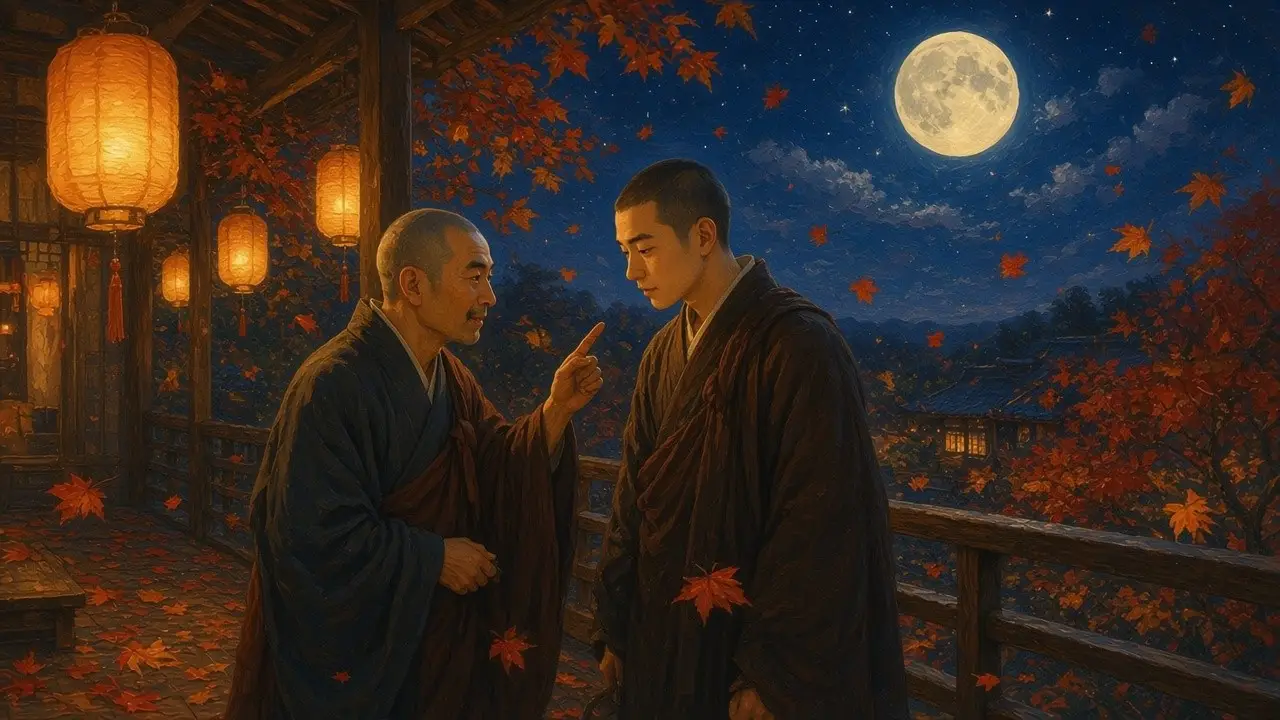
A Buddhist image compares teaching to a finger pointing at the moon. The finger is useful for showing where to look. But if you stare at the finger, you miss the moon.
Zen takes the image seriously. Words, rules and scriptures are guides. They are not the thing they describe. A person can know every sentence about kindness and still be unkind, or recite a description of calm while being anxious.
That does not make words useless. A good description helps you find the moon. The practice is to use it, then look past it: test what you are told against your own direct experience, and do not confuse having the words with having the thing.
The recipe and the taste

Niko reads a recipe for his grandmother’s soup and follows it exactly. The soup is fine, but when he tastes hers again, he knows his is missing something the page did not say.
He stands at her stove and watches her taste, add a pinch, taste again. The recipe was a finger, and the taste is the moon. He keeps the recipe and starts tasting as he cooks.
Try this today Take a word you lean on, such as “success,” and write what you would point at if you could not say it.
Cite or share this lesson
A plain reference you can paste into notes or an essay:
Quest2Reason. “The Finger and the Moon.” https://quest2reason.com/learn/lesson/finger-and-moon. Accessed 13 November 2026.
Sources
- Stanford Encyclopedia of Philosophy, “Japanese Zen Buddhist Philosophy” — Zen’s “no dependence on words and letters” and the finger pointing to the moon.