
Lesson · 4 min Stretch
Fixed by a Glance
In one line Fanon described being fixed by a stranger’s glance into a racial image, and how colonial racism shapes even the self.
Frantz Fanon was born in 1925 on Martinique, a French colony in the Caribbean. He trained as a psychiatrist in France, and in Black Skin, White Masks, published in 1952, he described the inner effects of colonial racism.
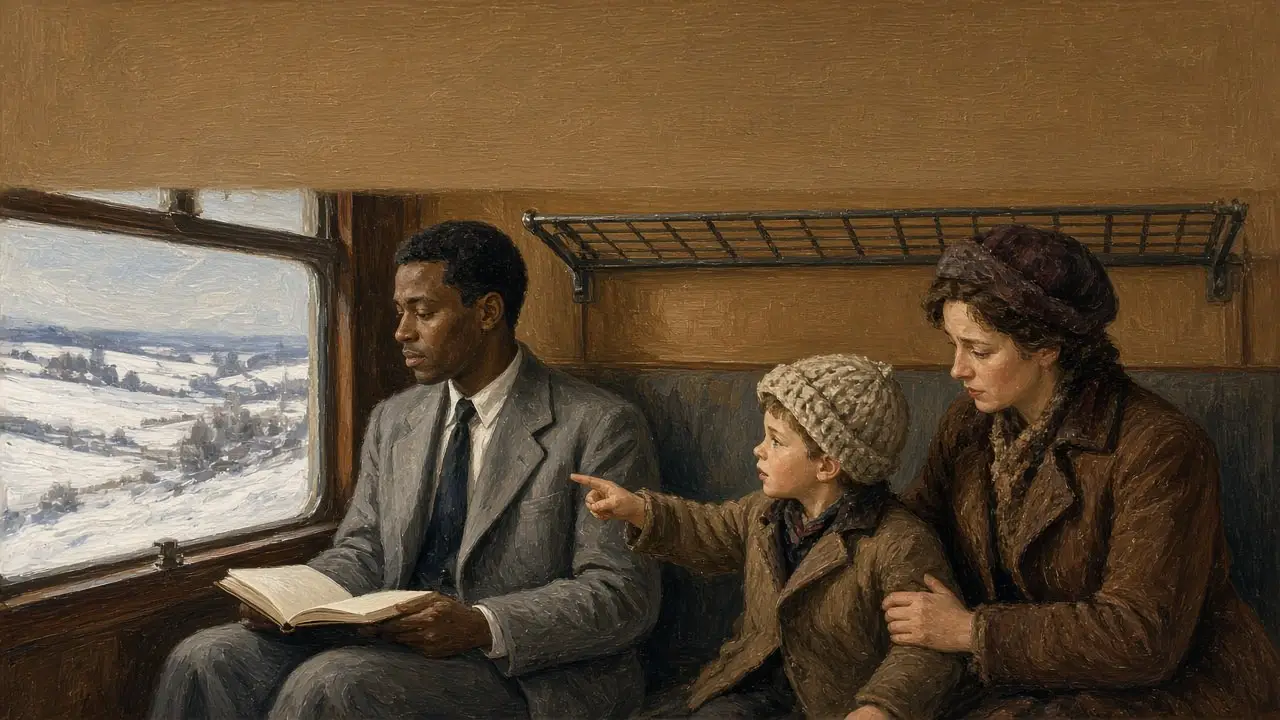
In a famous passage he recalls a child on a train in France pointing at him and saying, “Look, a Negro!” In that moment he felt himself fixed, sealed into an image others had made before he arrived. Colonial societies, he argued, taught colonized people to see themselves through the colonizer’s eyes, even to want to become white.
Fanon drew on Hegel’s story of recognition, discussed in Master and Servant, but argued that in colonial racism the master does not seek the other’s recognition at all.
Go deeper
Fanon’s account draws on the experience of the body: the way a glance can make someone aware of their skin as something others read before they speak. He criticized both the colonizers and the colonized middle class who imitated them. His psychiatric work, including at a hospital in Algeria, kept his philosophy close to the suffering of actual patients.
The first meeting

At a conference, a researcher is asked twice where she is really from, and once whether she is the assistant.
None of the speakers means harm. But each glance assigns her a place before she has said a word. Fanon’s description gives her language for the experience, and her colleagues a reason to notice what their first assumptions do.
Try this today Think of a label someone placed on you at a glance. Write one sentence about who you are that the label leaves out.
Cite or share this lesson
A plain reference you can paste into notes or an essay:
Quest2Reason. “Fixed by a Glance.” https://quest2reason.com/learn/lesson/fixed-by-a-glance. Accessed 13 November 2026.
Sources
- Stanford Encyclopedia of Philosophy, “Frantz Fanon” — Covers Black Skin, White Masks, his engagement with Hegel and his psychiatric work.
- Wikipedia, “Black Skin, White Masks” — Summarizes the 1952 book, including the train passage.