
Lesson · 4 min Stretch
Person and Community
In one line Gyekye argued that a person is made in community but still has dignity and rights of their own.
Akan thought describes a person as made of several parts: the okra, a life-giving soul from God; the sunsum, which shapes personality; and the mogya, blood passed down the mother’s line, which ties a person to a clan.
Many African thinkers stress that a person becomes fully a person through community. Ifeanyi Menkiti, a Nigerian philosopher, went far: personhood is earned over a life, so a newborn is not yet fully a person. Kwame Gyekye, from Ghana, answered with a moderate view. The community shapes us deeply, he said, but each person also has reason, will and dignity of their own.
For Gyekye, rights and duties go together. A community that crushed individual choice would betray the very persons it exists to nurture.
Go deeper
Gyekye’s book An Essay on African Philosophical Thought, first published in 1987, used Akan concepts to show that African traditions contain systematic philosophy, not only folk wisdom. His later Tradition and Modernity examined which customs should change. He argued that tradition is not fixed: each generation inherits it and may reform it.
The family shop
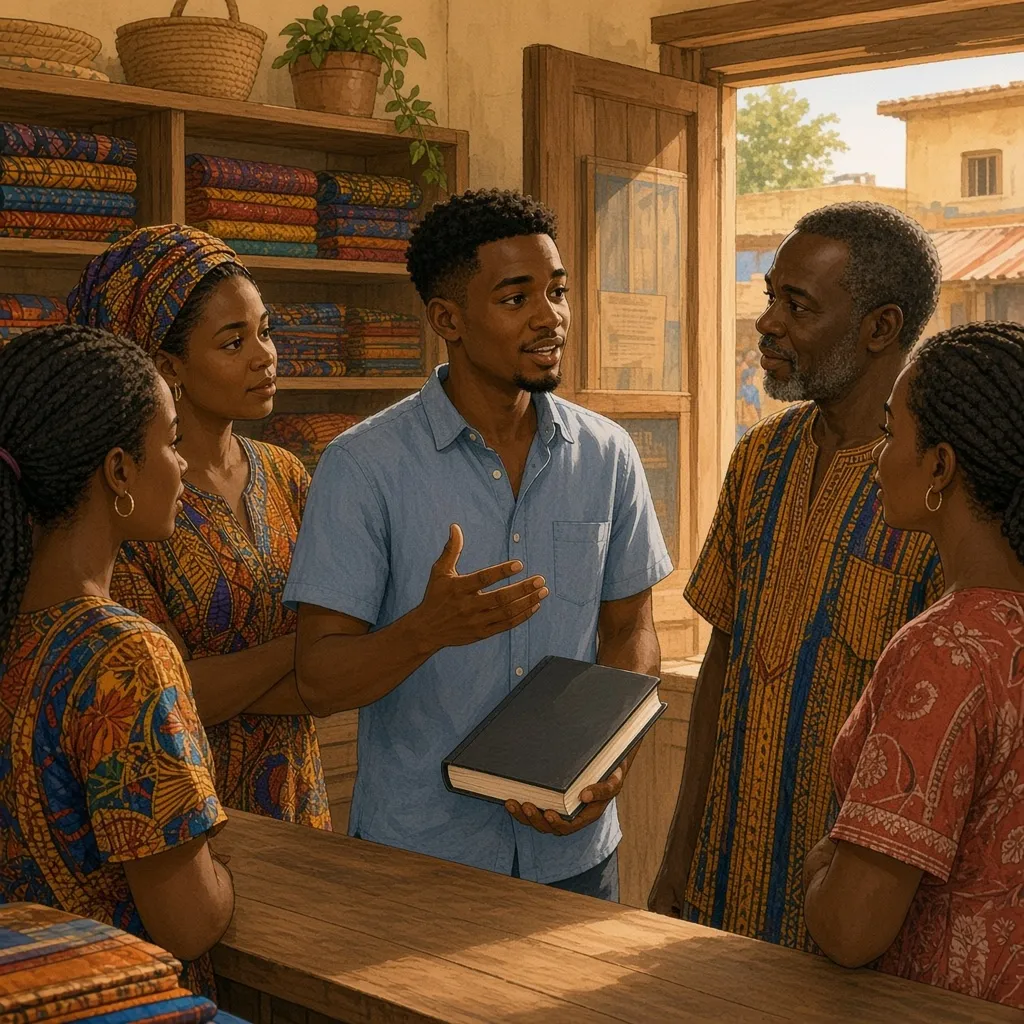
Kofi grew up in his family’s shop and owes much of who he is to it. His relatives expect him to run it when his father retires.
Kofi wants to study medicine. He talks it through with the family, offers to help hire a manager, and keeps working weekends. He honors what the community gave him without giving up a choice that is his to make.
Try this today List two things your community gave you and one thing you would defend even against it.
Cite or share this lesson
A plain reference you can paste into notes or an essay:
Quest2Reason. “Person and Community.” https://quest2reason.com/learn/lesson/person-and-community. Accessed 14 November 2026.
Sources
- Stanford Encyclopedia of Philosophy, “The Akan Concept of a Person” — Covers the okra and the debate between Wiredu and Gyekye over whether personhood is achieved.
- Stanford Encyclopedia of Philosophy, “African Ethics” — Written by Gyekye; discusses Menkiti’s view that personhood is attained, and how rights and duties relate.
- Wikipedia, “Kra (mythology)” — The Akan okra, sunsum as personality, and mogya, the mother’s blood that ties a person to a clan.