
Lesson · 4 min Gentle
Socratic Ignorance
In one line Before you say “obviously,” ask what the obvious part is.
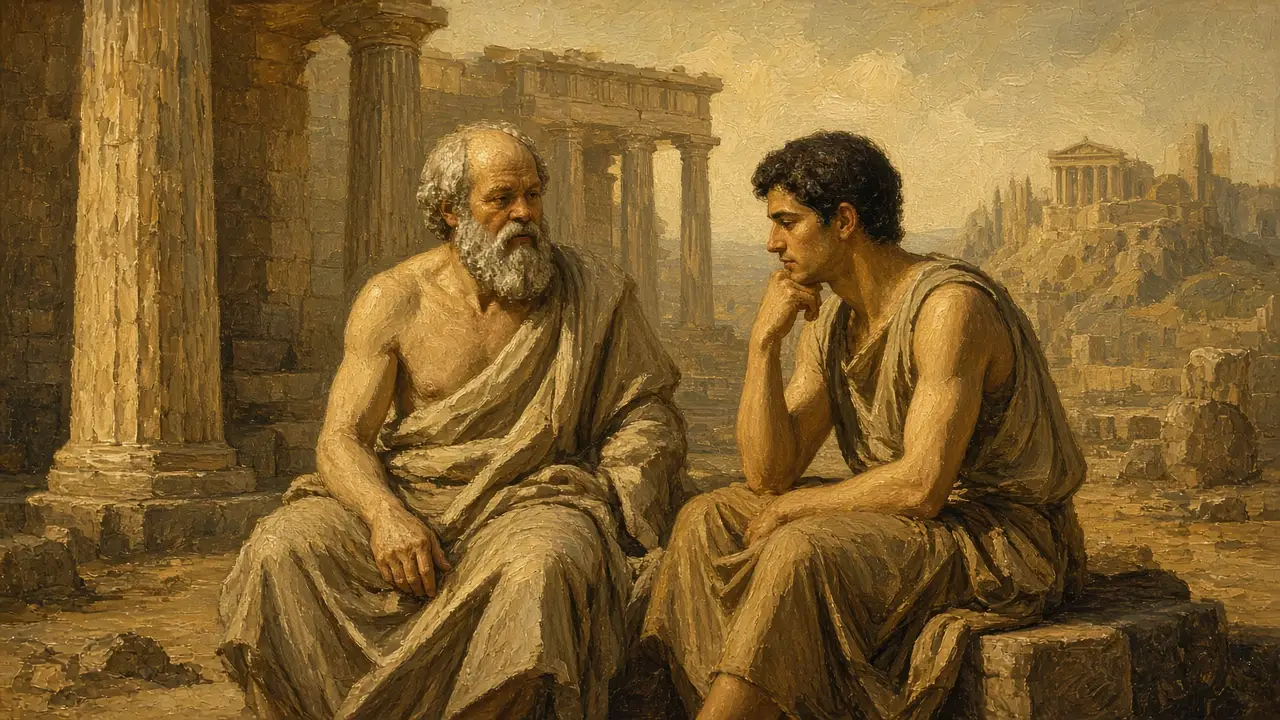
Socrates did not claim to know nothing at all. He claimed a sharper thing: the people most sure of their wisdom often could not explain it, and he at least knew that he did not know.
Ignorance, in this sense, is a place to start. It is the pause before you borrow a conclusion. You can still act. You just stop pretending the matter is settled because you feel settled.
The mark is simple. When you are about to say “obviously,” ask what the obvious part is, and whether you could teach it to a patient critic.
The old captain

Priya has sailed this coast for forty years. A young deckhand asks why last season’s survey boat ran aground. She says, “I have been at sea long enough. I just know it was the tide tables.” She has not opened the logbook.
Seniority can be real knowledge. It can also be a costume for a guess. Socratic ignorance would have her name the claim, then say what she has not checked.
Try this today Catch one “obviously” today and try to explain it to a patient critic.
Cite or share this lesson
A plain reference you can paste into notes or an essay:
Quest2Reason. “Socratic Ignorance.” https://quest2reason.com/learn/lesson/socratic-ignorance. Accessed 13 November 2026.
Sources
- Plato, Apology — Socrates compares his own knowing to the unexamined confidence of people called wise.
- Stanford Encyclopedia of Philosophy, “Socrates” — A survey of the figure and of wisdom as knowing what one does not know.
- Wikipedia, “I know that I know nothing” — The Socratic claim of ignorance.