
Lesson · 4 min Stretch
The Body Knows First
In one line Much of what you know lives in your body before you can put it into words.
Merleau-Ponty noticed that we do not usually work out how to move. A typist does not hunt for letters; her fingers find them. A person reaches for a cup without measuring the distance. The body has a kind of knowing that comes before explicit thought.
This matters because we often treat the mind as a commander and the body as a tool. But if you ask the typist to say where the letter “k” is, she may have to move her fingers to find out. The knowledge is in the doing.
Seeing this changes how we learn and trust ourselves. Some skills are built by practice, not by memorizing rules, and some hunches are the body’s way of speaking.
The typist’s hands

Bea has typed for years. Asked which finger presses the letter “g”, she cannot answer until she rests her hands over an imaginary keyboard and lets them show her.
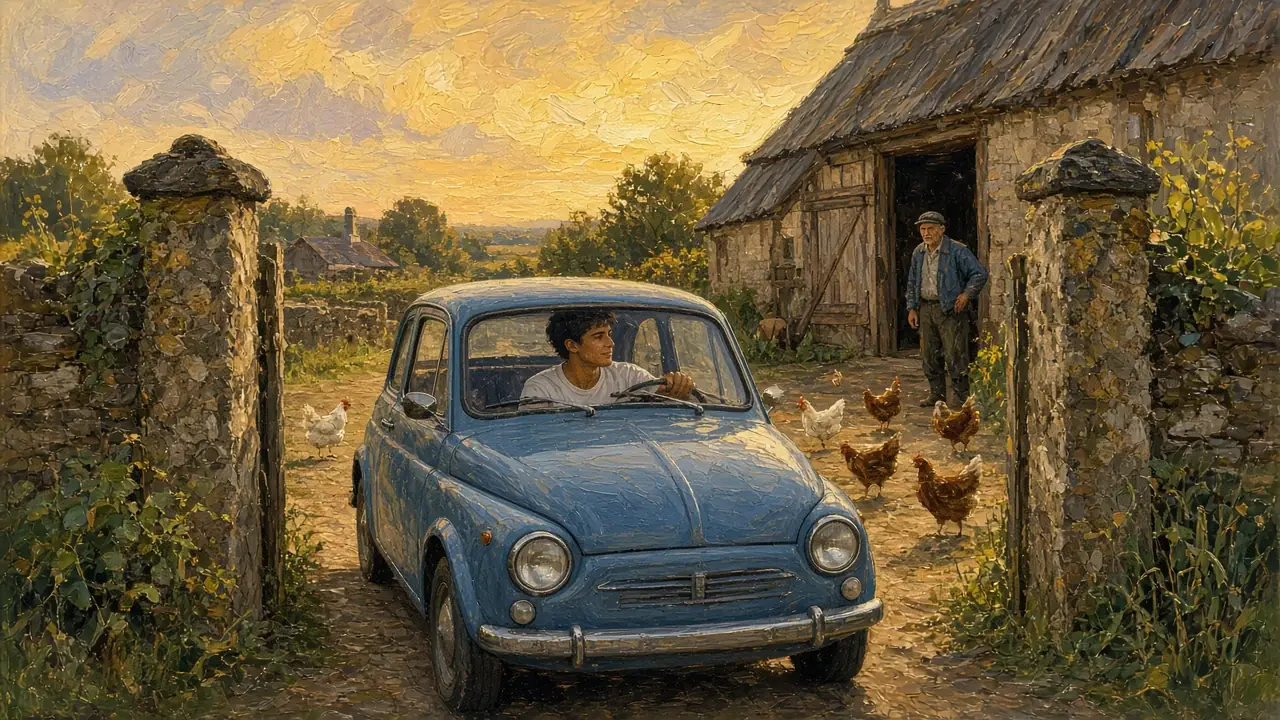
Her brother is learning to drive. He says the rules are clear, but the car still feels wide. After weeks of practice he slips through a narrow gate without thinking, and the width of the car has become part of his sense of himself.
Try this today Notice one skill your body does without instruction today, and try to describe how it does it.
Cite or share this lesson
A plain reference you can paste into notes or an essay:
Quest2Reason. “The Body Knows First.” https://quest2reason.com/learn/lesson/the-body-knows-first. Accessed 13 November 2026.
Sources
- Stanford Encyclopedia of Philosophy, “Maurice Merleau-Ponty” — Covers his view that skilled bodily know-how comes before explicit thought.
- Maurice Merleau-Ponty, Phenomenology of Perception (1945), Part One, chapter 3 — The typist whose hands know the keys and the driver who feels the width of the car. Paraphrased; no translation is quoted.