
Lesson · 4 min Stretch
The Bracket
In one line Describe how it shows up before you explain it.
Husserl asks for a description of experience as it is lived, before a theory explains it away.
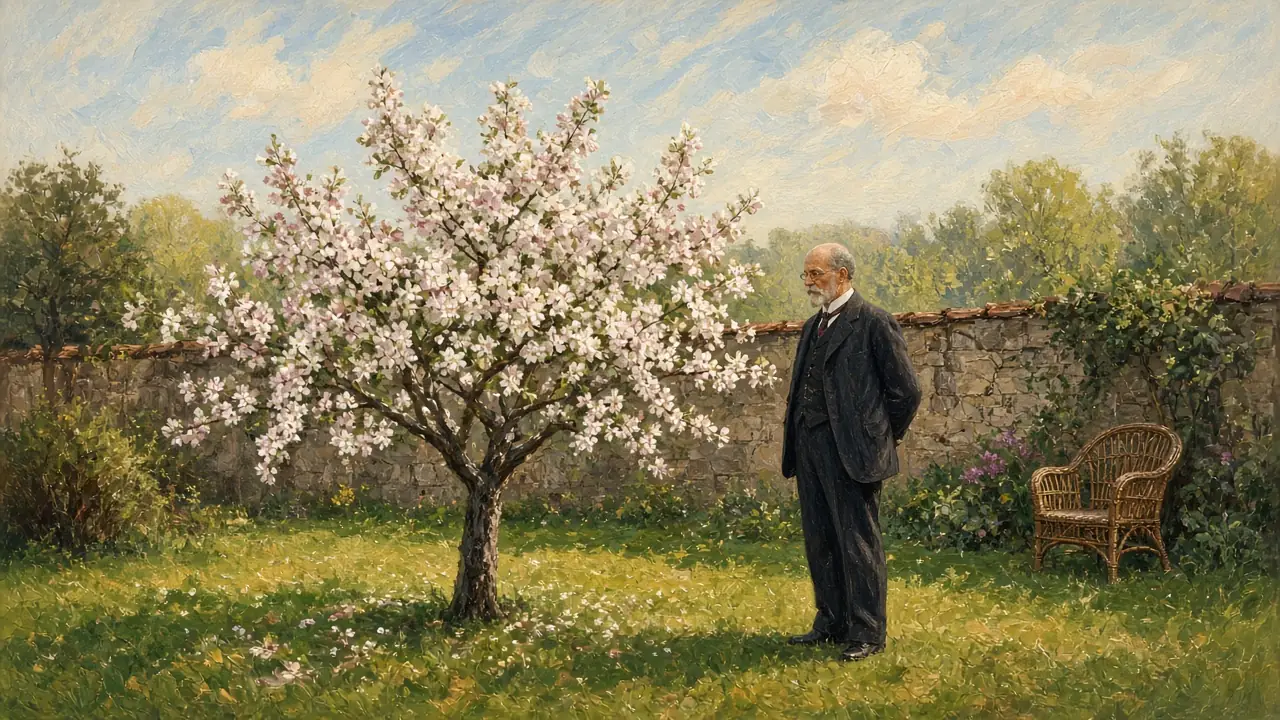
For a while you set aside whether the object really exists, the question a scientist’s inventory would settle, and you look at how it shows itself: as near, as remembered, as feared, as meant. He calls that pause a bracketing. It is not a denial of the world. It declines to skip the appearing. Try it with a feeling: before you explain it, say where it sits, how strong it is, and what it is like.
Go deeper
Husserl’s epoché, or bracketing, does not deny the world; it sets aside the question of whether things exist in order to describe how they appear. He thought this would give philosophy a firm starting point.
Later phenomenologists, including Heidegger and Merleau-Ponty, argued that we can never step fully outside our situation, so bracketing is always partial.
The cause first

A pain is immediately given a cause from a textbook. Nobody has said whether it is sharp, whether it spreads, whether it is feared.
The bracket holds the cause still long enough to describe how the pain shows up.
Try this today Before you explain a feeling, say where it sits, how strong it is and what it is like.
Cite or share this lesson
A plain reference you can paste into notes or an essay:
Quest2Reason. “The Bracket.” https://quest2reason.com/learn/lesson/the-bracket. Accessed 13 November 2026.
Sources
- Stanford Encyclopedia of Philosophy, “Edmund Husserl” — The epoché, or bracketing, in Husserl’s method.
- Edmund Husserl, Ideas Pertaining to a Pure Phenomenology (1913) — Paraphrase of bracketing as a description of how something shows itself. This lesson does not quote a translation.