

Lesson · 4 min Gentle
The Kestrel
In one line Attending to something outside yourself, like a bird or a task, can quiet your own worries.
Murdoch described being in an anxious, resentful state of mind when she suddenly noticed a kestrel hovering outside her window. In an instant her worries vanished, and there was only the bird. When she went back to her worry, she said, it seemed less important.
She called this unselfing. Attention directed to something beautiful or real, such as a bird, a poem or a difficult task, pulls us out of our own fantasies and grievances. It does not require religion or effort of will, only looking.
This matters morally because much of our unkindness comes from absorbed self-concern. Practices of attention, such as paying close notice to a plant, a person or a craft, can loosen it.
The heron on the canal
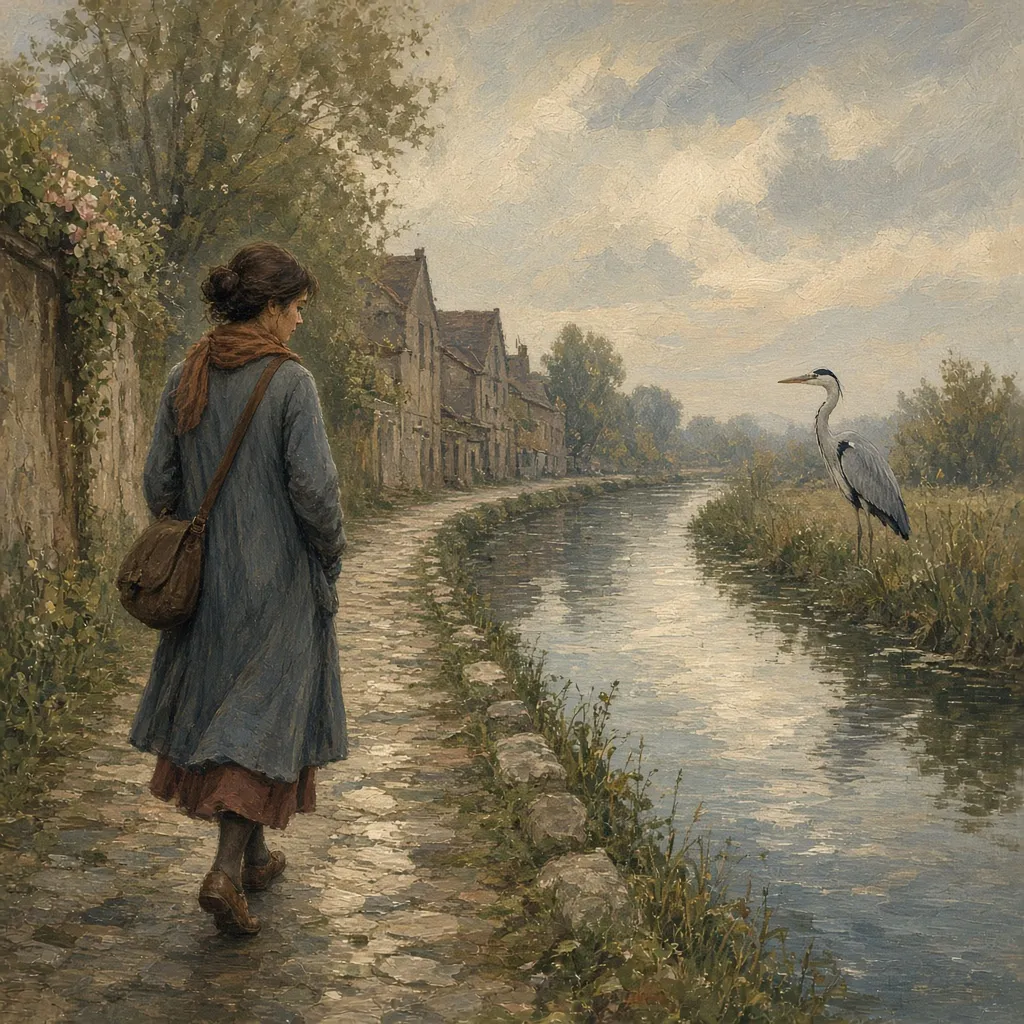
Tamsin walks along a canal after a quarrel, going over what she should have said. A gray heron stands on the opposite bank, perfectly still, then lifts off with a slow beat of wings.
She notices that for those seconds she did not think about the quarrel at all. Back at her desk, the argument seems smaller and she writes a short, plain message of apology. The bird had not solved anything, but it had moved her out of the way.
Try this today Spend five minutes watching one living thing outside, and note what happens to your worries.
Cite or share this lesson
A plain reference you can paste into notes or an essay:
Quest2Reason. “The Kestrel.” https://quest2reason.com/learn/lesson/the-kestrel. Accessed 14 November 2026.
Sources
- Stanford Encyclopedia of Philosophy, “Iris Murdoch” — Covers her account of unselfing and the way attention to the world loosens self-concern.
- Iris Murdoch, The Sovereignty of Good (1970) — The kestrel passage is in the essay “The Sovereignty of Good Over Other Concepts.” Paraphrased; this lesson does not quote it.