
Lesson · 4 min Gentle
What It’s For
In one line Understand a thing by what it is for.
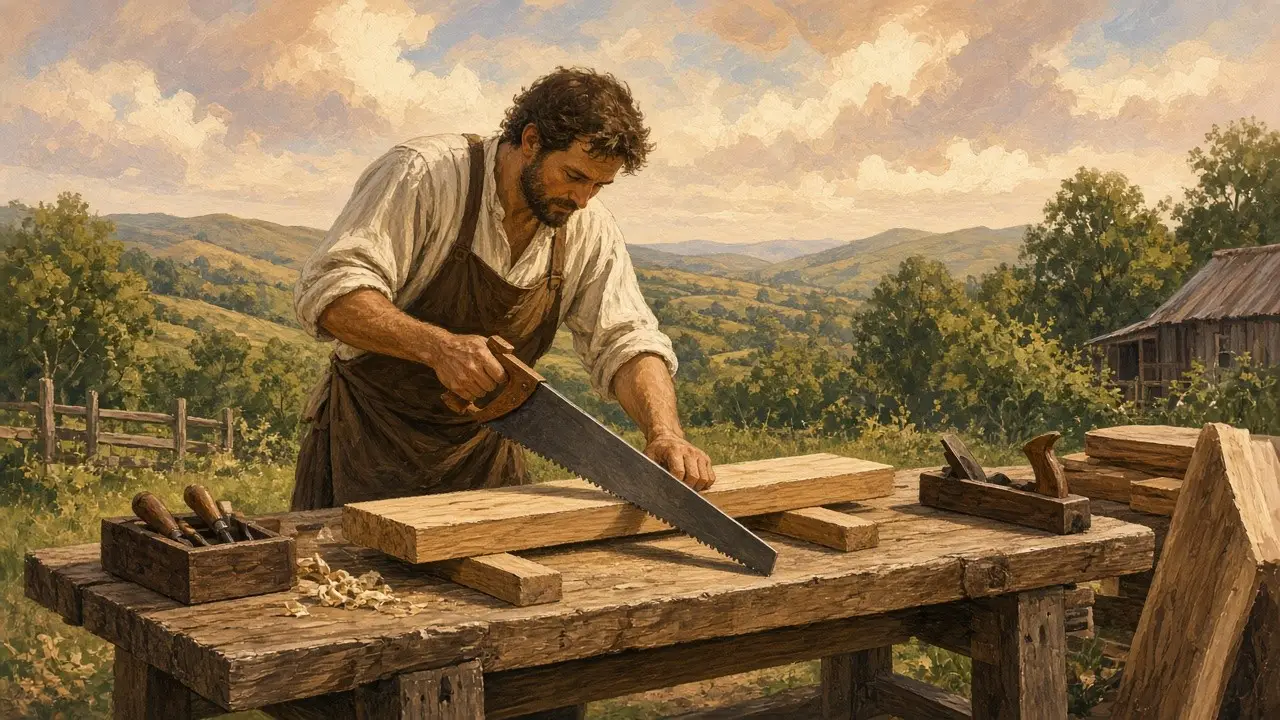
Aristotle starts from what a thing is for. A knife is not understood until you know the cut. A life is not understood until you know the activity that completes it. Happiness, in this school, is not a mood added at the end. It is that activity, done well.
An account that only says it happened is thin. You can still ask what it is made of, what shape it has, what set it moving, and what it is for. Leave the last question out and you have a pile, not a purpose.
A city, on this picture, is for living well, not merely for staying alive or staying rich. Wealth and safety can be tools. The tool is not the activity the life was for.
The prize at the end

A person wins a prize and calls the year a success because the feeling at the end was warm. The prize is a result. The warmth is a mood.
Aristotle would still ask whether the work the year was for actually got done. A warm ending is not yet that work.
Try this today Pick one tool, job or rule and ask what it is for, and whether it still serves that.
Cite or share this lesson
A plain reference you can paste into notes or an essay:
Quest2Reason. “What It’s For.” https://quest2reason.com/learn/lesson/what-its-for. Accessed 13 November 2026.
Sources
- Aristotle, Nicomachean Ethics, Book I — Happiness is the activity of a human life doing what it is for, and doing it well. Paraphrase. The Greek text is public domain.
- Aristotle, Physics, Book II, and Politics, Book I — An explanation that leaves out what a thing is for stays thin. A city is for living well, not only for staying alive.