
Lesson · 4 min Stretch
Who Should Steer the Ship?
In one line Plato asked why a ship of state should be steered by vote rather than by experts; democracy’s defenders answer back.
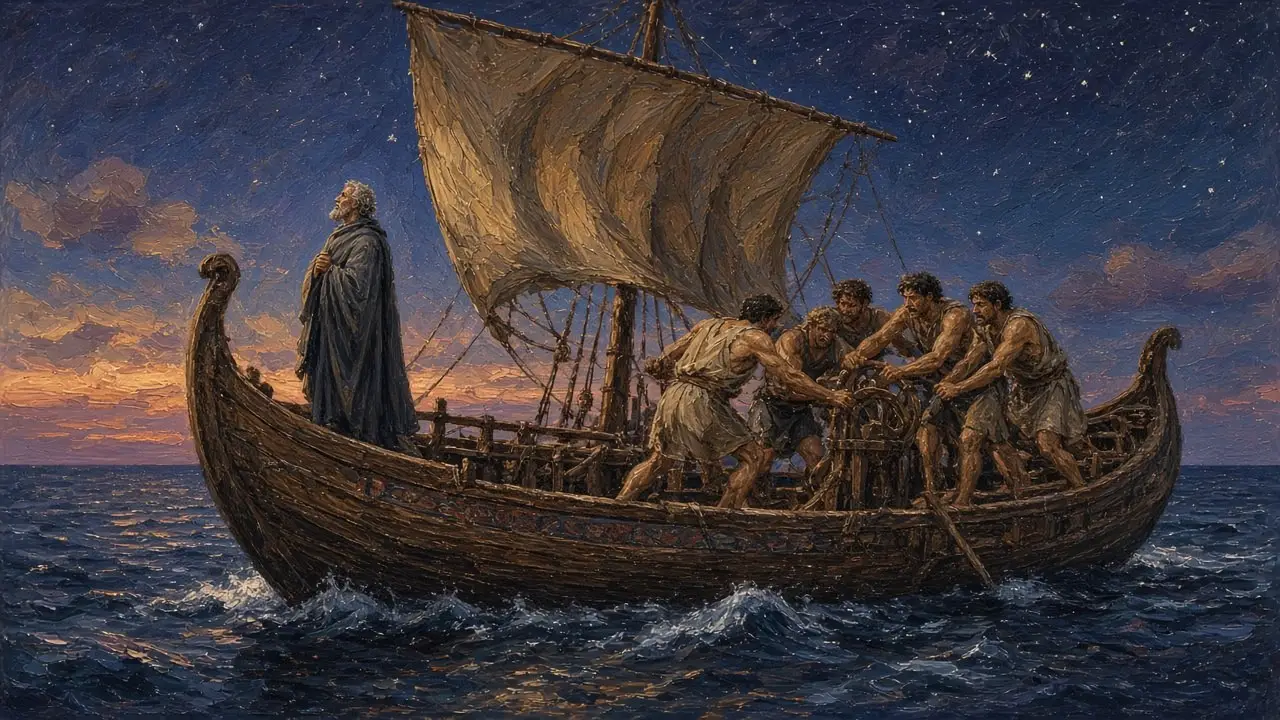
In the Republic, Plato compares a city to a ship. The sailors quarrel over the helm, each sure he can steer, while the one person who has studied the stars and winds is mocked as a stargazer. Why, Plato asks, should a city be steered by votes rather than by those who know?
Defenders of democracy give several answers. Experts have interests of their own, and power without accountability tends to serve itself. Many voters together can know things no expert does, about their own lives and needs. And there is a value in self-rule: being governed by laws you had a say in respects people as equals.
Today Jason Brennan revives Plato’s worry with epistocracy, giving more weight to informed voters. Critics reply that someone must decide who counts as informed.
Go deeper
Aristotle suggested that a crowd, each contributing a part, can judge better than a single expert, as a feast to which many contribute can be better than one person’s dinner. Modern work on the wisdom of crowds supports this under some conditions, such as independent and diverse views. John Dewey argued that democracy is less a voting system than a way of life, built on public discussion and shared inquiry.
The bus routes

A city’s transport experts redesign the bus routes for efficiency. Ridership data looks better on paper.
At public meetings, older residents point out that the new routes skip the clinic and the market, which the data had not weighted. The experts revise the plan. Neither side had the whole picture; the meeting let each correct the other.
Try this today Pick a decision your town made recently. Ask what voters knew that experts might have missed, and the reverse.
Cite or share this lesson
A plain reference you can paste into notes or an essay:
Quest2Reason. “Who Should Steer the Ship?.” https://quest2reason.com/learn/lesson/who-should-steer. Accessed 13 November 2026.
Sources
- Stanford Encyclopedia of Philosophy, “Democracy” — Surveys arguments for and against democracy, including epistocracy.
- Wikipedia, “Ship of State” — Explains Plato’s image from the Republic.
- Wikipedia, “Epistemic democracy” — Covers Brennan’s case for epistocracy.
- Plato, Republic, Book VI, 488a–489d (Jowett translation) — The ship, the quarreling sailors and the navigator dismissed as a stargazer.
- Aristotle, Politics, Book III, chapter 11 (Ellis translation) — Compares the judgment of the many to a feast to which many contribute.