
Lesson · 4 min Gentle
Writing It Down
In one line A written record keeps what happened in your own words, for you and for later readers.
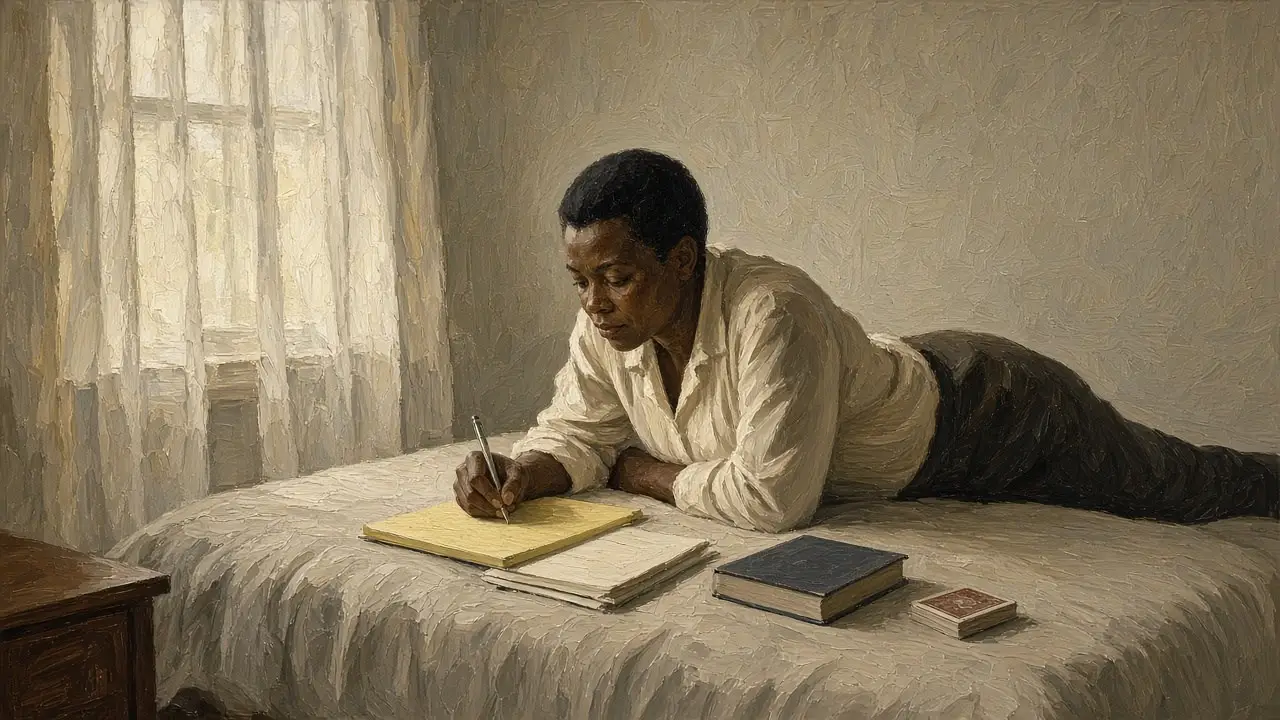
To bear witness is to say what happened so it cannot be quietly revised. Maya Angelou wrote her life in books. Many others keep letters, diaries or notes. The form matters less than the act: putting events in your own words, with dates and details.
A written record does three things. It fixes memory before it softens or shifts. It lets you see a pattern over time, such as a boss who often changes the terms. And it gives others something to read, now or later, that they cannot easily dismiss.
Plain language is enough. Say who, what, when and what it meant to you. Accuracy is the dignity of a record; it needs no ornament.
The kitchen table diary

Omar’s landlord keeps promising repairs and denying he promised. Omar starts writing on his kitchen table after each call: the date, what was said and what happened.
After three months he has a page of entries showing the pattern. When the matter reaches a tenants’ office, his notes are read and taken seriously. The record did what his memory alone could not.
Try this today Write five plain sentences about something that happened to you this week, with the date.
Cite or share this lesson
A plain reference you can paste into notes or an essay:
Quest2Reason. “Writing It Down.” https://quest2reason.com/learn/lesson/writing-it-down. Accessed 13 November 2026.
Sources
- Wikipedia, “I Know Why the Caged Bird Sings” — Her autobiography as testimony.
- Maya Angelou, I Know Why the Caged Bird Sings (1969) — Her early life written down in her own words. Copyrighted; this lesson does not quote it.