
Chinese philosophy · from c. 500 CE
Zen
Overview
Awakening is found in direct experience, not in doctrine. Sitting, ordinary work and fresh attention are the practice.
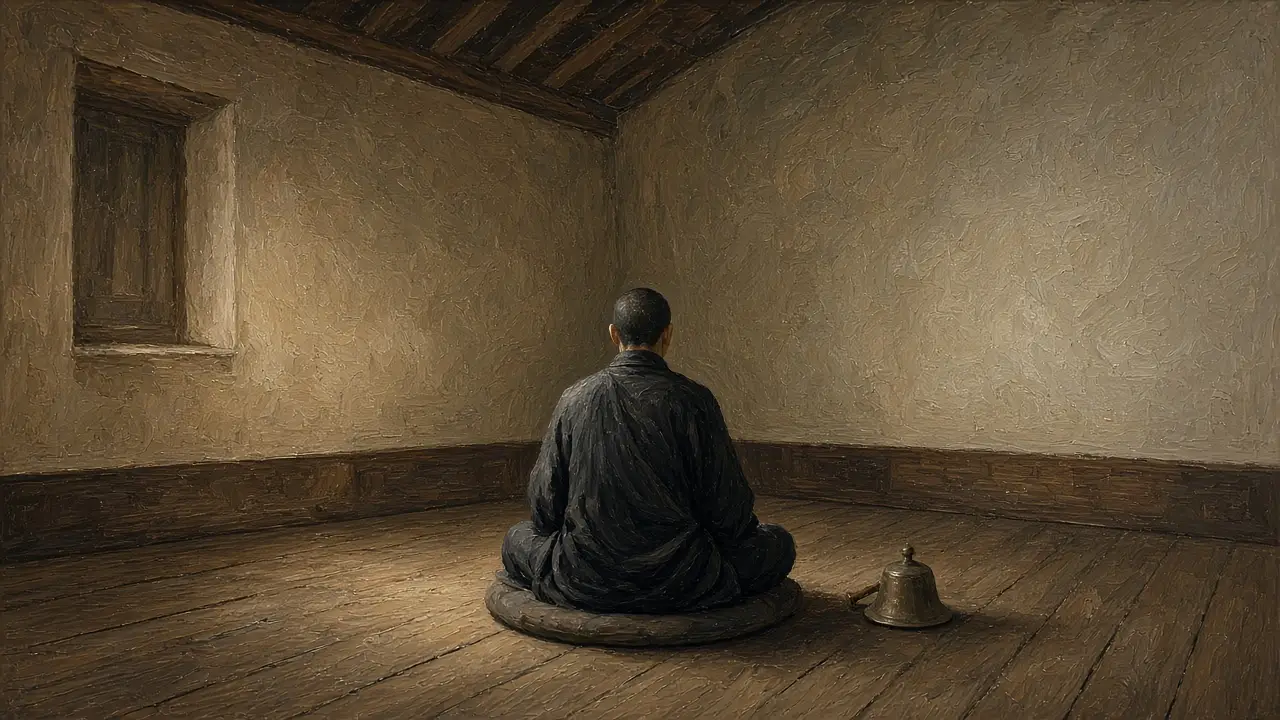
Zen grew in China as Chan and later flourished in Japan. It is a school of practice more than of doctrine. Its teachers point away from scripture and toward direct experience: sit, look and see for yourself. Zazen, seated meditation, is the core exercise, often done simply by attending to breath and posture without a goal. Dogen, in thirteenth-century Japan, taught that sitting is not a means to awakening but an expression of it.
Read more (2 more paragraphs)
Zen stories and koans, such as the sound of one hand, are not riddles with hidden answers. They are prompts that break the habit of settling things by words. The saying about the finger and the moon warns against mistaking the pointer for what it points at. Beginner’s mind keeps the same spirit alive in skilled people, who are tempted to stop looking.
The school also insists that practice belongs to ordinary life. Chopping wood, carrying water, sweeping and eating are the place where attention is tested. Critics note that Zen institutions have their own rules, hierarchies and failures, and that experience alone cannot settle every question. The lasting habit is to do one thing at a time, with the whole of yourself.
Where it answers
What is beautiful?
Beauty lives in the simple, the worn and the passing, seen without grasping.
How should we act?
Give the task in front of you your whole attention. The practice is the ordinary hour.
What is a life for?
Meaning is not found by chasing it. It shows up when you stop grasping and look.
Key terms
- Zazen
- Seated meditation.
- Beginner’s mind
- Meeting each thing freshly, without the expert’s assumptions.
- Koan
- A puzzling question or story, such as “What is the sound of one hand?”, used to break habitual thinking.
- Satori
- Sudden awakening: seeing into one’s true nature.
- Shikantaza
- “Just sitting”: Dogen’s meditation with no goal or object.
In their words
“To study the self is to forget the self.”
Further reading
- Platform Sutra · Huineng
- Shobogenzo · Eihei Dogen
- Gateless Gate · Wumen Huikai
Learn this
Related schools
Influenced by


Influenced

In this tradition


Compare
Cite or share this page
A plain reference you can paste into notes or an essay:
Quest2Reason. “Zen.” https://quest2reason.com/learn/ideas/zen. Accessed 14 November 2026.